Can You Take a Mobility Scooter on a Plane? (Airline Rules Explained)
-
 Jericho De Guzman
 - 2026-09-05
- 0 comments
 Jericho De Guzman
Planning a trip and wondering, can you take a mobility scooter on a plane? The short answer is a reassuring yes — airlines are required to accommodate mobility devices, and thousands of travelers fly with scooters every day. But a handful of details separate a smooth journey from a stressful one, and almost all of them come down to your battery and how your scooter folds. Here's everything you need to know to fly with confidence.
Your rights as a traveler
Airlines are legally required to accommodate passengers with mobility devices, and mobility equipment generally travels free of charge as assistive equipment — it doesn't count against your baggage allowance. You also have the right to gate-check your scooter, meaning you can use it right up to the aircraft door and have it returned to you at the door on arrival. Knowing this upfront takes a lot of the anxiety out of flying.
It really comes down to the battery
The single most important factor when flying with a scooter is the battery. Most airlines allow scooters powered by lithium batteries, but there are rules around watt-hour limits and how the battery is handled. In many cases the battery must be removed and carried into the cabin rather than left installed — and sometimes that's actually required for safety.
This is why removable batteries make air travel dramatically easier. A scooter with a battery you can pop out lets you comply with airline rules effortlessly, and it makes the whole device lighter to handle at the same time. Always contact your airline in advance, tell them you're traveling with a mobility device, and ask specifically about their lithium-battery policy and watt-hour limits so there are no surprises at the gate.
Understanding watt-hours
Airlines describe battery limits in watt-hours (Wh), and it helps to know your scooter's number before you fly. You'll often find it printed on the battery or in the scooter's documentation; if not, you can calculate it by multiplying the battery's voltage by its amp-hours. Many airlines allow batteries up to a certain watt-hour threshold, sometimes with an allowance for one or two spares carried in the cabin. Having this figure ready when you call the airline makes the conversation quick and removes any doubt at check-in. When in doubt, ask us for your scooter's battery specifications.
Folding size matters just as much
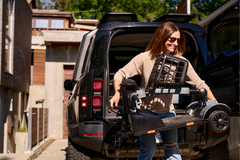
After the battery, the next thing that determines how easy your scooter is to fly with is how compactly it folds. A scooter that folds down small is far easier to check, gate-check, or stow — and it's less likely to be damaged in transit because it's a tidy, manageable package rather than an awkward one.
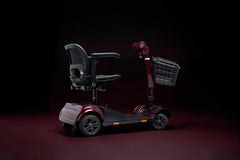
Our Journey Lite is purpose-built for exactly this kind of travel. It folds in seconds, uses a lightweight aluminum frame, travels up to 25.91 miles per charge, and has removable batteries — so it's ready for the airport and for exploring once you land. A travel-friendly scooter turns flying from a worry into a non-issue.
Step-by-step: flying with your scooter
Before you book: confirm your scooter's battery type and watt-hours, and check your airline's mobility-device and battery policy. If you're choosing a scooter with travel in mind, prioritize removable batteries and a compact fold.
When you book: tell the airline you'll be traveling with a mobility device. Many airlines have a dedicated accessibility desk that can note it on your reservation.
At the airport: arrive early to give yourself time. Let the gate agent know you'd like to gate-check your scooter so it's waiting for you at the aircraft door on arrival. Remove and carry the battery into the cabin if required.
Packing essentials: bring the correct charger for your destination — and if you're traveling internationally, make sure it matches the local outlets and voltage.
If you're still choosing a travel-ready model, our buyer's guide can help you pick one that flies well, and our portable scooter guide digs deeper into what makes a scooter genuinely travel-friendly.
At the gate and on board
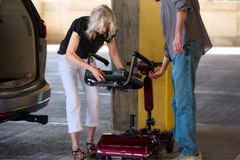
Gate-checking is your friend. When you arrive at the gate, remind the agent you'd like to gate-check the scooter so it's brought to the aircraft door for you on arrival rather than sent to baggage claim. Fold the scooter and remove the battery to carry on if required. It helps to attach simple written instructions to the scooter for the ground crew — how to fold it, where the free-wheel lever is — so it's handled correctly. Keep your battery, charger, and any small removable parts with you in the cabin. These small steps mean your scooter is ready to roll the moment you step off the plane.
At your destination
A little planning at the other end keeps the trip smooth. Charge your scooter fully the night before travel and again when you arrive, using the correct charger and adapter for the local outlets. If you're staying somewhere unfamiliar, note where you can charge and store the scooter. And keep your battery and charger with you rather than packed away, so you're ready to roll the moment you reach your hotel, cruise cabin, or family's home. Cold destinations can temporarily trim your range, so plan a little buffer in winter.
Frequently asked questions
Do I have to pay extra to fly with a scooter?
Generally no — mobility devices travel free as assistive equipment and don't count against your baggage allowance. Confirm the specifics with your airline when you book.
Can the battery go in the cabin?
Often yes, and sometimes it's required for lithium batteries. Check your airline's battery policy before you fly, and choose a scooter with removable batteries to make compliance easy.
How do I find my battery's watt-hours?
Look on the battery or in your scooter's documentation, or multiply the voltage by the amp-hours. Have this number ready when you call the airline — and reach out to us if you need your scooter's specs.
Will my scooter be damaged in transit?
Gate-checking reduces handling and risk, since your scooter goes on and comes off at the aircraft door. A compact, folding scooter is also easier to handle and less prone to damage than a bulky one. Attaching folding instructions for the crew helps too.
What if I'm flying internationally?
The same principles apply, but double-check the airline's battery rules and bring a charger compatible with your destination's outlets and voltage.
Want a scooter that's ready to fly? See the Journey Lite — it folds fast, has removable batteries, and travels up to 25.91 miles per charge. Free US shipping, a 90-day money-back guarantee, and 10% off with code WELCOME10.