Mobility Aids for Seniors: A Family's Complete Guide
-
 Jericho De Guzman
 - 2026-09-05
- 0 comments
 Jericho De Guzman
When a parent or grandparent starts slowing down, the whole family feels it — and the questions pile up fast. Are they safe getting around? Should we be worried about falls? Is it time for a cane, a walker, a wheelchair, or a scooter? This guide is written for families navigating that moment. It explains the main mobility aids for seniors, how to tell which one fits, how to talk about it with care, and how to make a confident, low-risk choice together.
Start with the real goal: independence
It's easy to frame mobility aids as a loss — a sign of decline. Reframing helps: the right aid is what keeps a senior independent, active, and connected. It means still getting to the grocery store, the garden, church, and family gatherings under their own power. Most older adults resist aids they feel are being imposed on them, and embrace ones that clearly give freedom back. Leading with independence, not limitation, changes the entire conversation.
It also helps to remember why this matters so much. Staying mobile is closely tied to staying healthy — physically, mentally, and socially. Seniors who can keep getting out tend to stay more active, more engaged, and less isolated. In that light, a mobility aid isn't a step down; it's a tool that protects everything that makes daily life full.
The main types of mobility aids
Aids exist on a spectrum from minimal support to full powered mobility. Understanding the range helps you match the tool to the need.
Canes provide light balance support for someone who is mostly steady but occasionally unsure. They're simple and unintrusive, but they don't help much with stamina or significant balance issues.
Walkers and rollators offer more stability and, with rollators, a built-in seat for resting. They're excellent for balance and confidence indoors and on short outings, but they still require the person to walk the whole distance — which is the limiting factor for many seniors.
Wheelchairs provide seated mobility for those who can't walk longer distances or need to be off their feet. Manual chairs can be self-propelled or pushed by a caregiver; lightweight models are far easier to lift and transport. If the person tires quickly or has significant balance concerns, a wheelchair may be the safer, more comfortable choice.
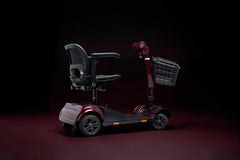
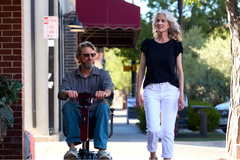
Mobility scooters are ideal for seniors who can walk short distances but tire over longer ones. A scooter restores range dramatically — errands, parks, markets, and visits all become easy again — while the person keeps standing and walking for short stretches, which is good for them. For many active seniors, a foldable scooter hits the sweet spot between support and independence.
Scooter or wheelchair? A simple test
The most common family question is whether to choose a scooter or a wheelchair. A useful rule of thumb: if the person can walk short distances but tires or loses confidence over longer ones, a mobility scooter is often the best fit. If they need seated support most of the time or can't safely walk short distances, a wheelchair is likely the better choice. Our scooter vs wheelchair guide walks through this decision in more detail.
Reading the signs it's time
Families often wonder whether they're jumping the gun. A few common signals suggest an aid would genuinely help: declining invitations or outings because walking is too tiring; holding onto walls, furniture, or a companion's arm to stay steady; near-falls or an actual fall; noticeably slower, more effortful walking; or simply staying home more than they used to. If getting around is shrinking their world, an aid can expand it again — and acting sooner is usually easier than waiting for a fall to force the issue.
What to prioritize when choosing
Whatever type you land on, a few factors matter enormously for seniors:
Ease of use. Simple, intuitive controls reduce frustration and mistakes. Features like a clear display or keyless start can make a scooter far less intimidating for a first-time user.
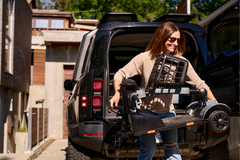
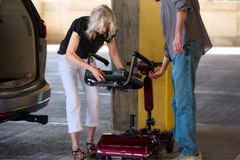
Transport and storage. If family members will help load the aid into a car, folding and weight are critical. A scooter that folds in seconds and has removable batteries turns “we can't take it” into “let's go.”
Weight capacity and range. Choose an aid rated comfortably above the person's weight, and — for scooters — with enough range for a full day out. Our scooters support up to 330 lb and travel up to 25.91 miles per charge.
Comfort and support. Seat comfort, stability, and a reassuring feel keep the person actually using the aid rather than avoiding it.
If a scooter looks like the right direction, our buyer's guide helps you pick a specific model with confidence.
Safety and confidence at home and out
A mobility aid does more than move someone from A to B — it can meaningfully reduce fall risk, which is one of the biggest health threats older adults face. A steady scooter or well-fitted wheelchair means fewer risky moments reaching, balancing, or pushing through fatigue. It also restores confidence, and confidence itself keeps people active: someone who trusts they can get somewhere and back is far more likely to keep saying yes to outings, appointments, and time with family. When you weigh an aid, weigh this too — the safety and peace of mind it brings to the whole family, not just the mobility.
Having the conversation
How you introduce the idea matters as much as the aid itself. Lead with what they'll gain — “you'd be able to do the whole farmers market again” — rather than what they can't do. Involve them in the choice, colors and all; ownership drives acceptance. Frame a trial as low-risk, which is easy when there's a money-back guarantee. And listen: sometimes the resistance is really about fear or pride, and being heard is what unlocks the yes.
Timing and tone help too. Choose a calm, unhurried moment rather than the aftermath of a fall or an argument. Ask questions instead of issuing conclusions — “would it be nice to get to the garden more easily?” lands better than “you need a scooter.” And if one conversation doesn't settle it, that's normal; the idea often needs to sit for a little while before it feels like their own.
Making a low-risk choice together
The fear of choosing wrong stops many families from acting at all. The fix is to buy from a retailer that ships free and offers a money-back guarantee, so a trial genuinely costs nothing but a little time. Our scooters come with a 90-day money-back guarantee, and our team is happy to talk through the options before you buy — so you can move forward without the pressure of a permanent decision.
Frequently asked questions
How do I know it's time for a mobility aid?
Common signs include avoiding outings because they're too tiring, holding onto furniture or walls, near-falls, or declining invitations that involve walking. If getting around is shrinking their world, an aid can expand it again.
Will using an aid make them weaker?
Used appropriately, the right aid keeps people more active, not less — a scooter, for example, lets someone keep going out and staying social while still walking short distances. Inactivity from staying home is usually the bigger risk.
What if we choose the wrong one?
Choose from a retailer with a money-back guarantee so a trial is low-risk. Our scooters come with a 90-day money-back guarantee, and we're happy to help you choose before you buy.
How do we handle resistance?
Focus on independence and involve them in the decision. Let them pick the model and color, frame it as a trial, and emphasize everything the aid lets them keep doing. Give the idea time if needed.
Can an aid help prevent falls?
Yes — a stable scooter or well-fitted wheelchair reduces risky moments of reaching, balancing, or pushing through fatigue, which lowers fall risk and brings peace of mind to the whole family.
Can a senior use a scooter and still stay active?
Absolutely — a scooter handles the tiring long distances so they can save their energy for standing, walking short stretches, and doing the things they enjoy. It supports an active life rather than replacing it.
Helping a loved one stay independent? Talk it through with us anytime, or contact our team for a personal recommendation. You can also see our foldable scooters — free US shipping, a 90-day money-back guarantee, and 10% off with code WELCOME10.