Lightweight Mobility Scooters: The Best Balance of Weight and Range
-
 Jericho De Guzman
 - 2026-09-05
- 0 comments
 Jericho De Guzman
A lightweight mobility scooter can be the difference between a scooter you use every single day and one that stays in the garage. When a scooter is easy to lift, load, and store, it comes with you everywhere; when it's heavy and awkward, it quietly gets left behind. But lightweight only helps if the scooter still has real range and capacity. This guide shows you how to get the best of both — low weight and genuine everyday usefulness — and how to evaluate a scooter before you buy.
Why lighter is better — up to a point
A lighter scooter is easier to fold, lift into a trunk, maneuver indoors, and manage on your own. That's why aluminum frames are so popular: they cut weight significantly without sacrificing durability. For anyone who transports their scooter by car or stores it in a small space, every pound saved makes daily life easier.
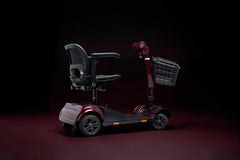
Our Journey Lite is a great example — its frame is 65.2 lb without batteries, and it folds in seconds. That combination of light weight and quick folding is what makes a scooter genuinely portable rather than portable in name only.
But there's a limit to how far “lighter is better” goes. Past a certain point, shaving weight means cutting the things that make a scooter useful — and that's where people get burned.
The mistake to avoid
The classic mistake is buying the lightest scooter you can find, only to discover it travels just a few miles per charge or can't comfortably support your weight. A scooter that's featherlight but useless doesn't solve your problem — it creates a new one. The goal isn't minimum weight; it's the best balance of weight against range, capacity, and comfort.
A truly good lightweight scooter keeps the essentials. Our scooters stay light while still holding up to 330 lb and traveling up to 25.91 miles per charge. That's the sweet spot: easy to handle, but with the range and capacity to actually live your life.
How the weight breaks down
When you evaluate a scooter's weight, don't just look at the total number — look at how it's distributed and whether the design helps you lift it. Removable batteries are a game-changer here, letting you lift the frame and the batteries separately rather than heaving one heavy unit into a trunk. A scooter that's slightly heavier overall but breaks into manageable pieces can be far easier to load than a lighter one you must lift all at once. The Journey Lite's removable batteries make solo loading realistic for many people.
Materials and why they matter
The frame material is what makes a scooter light in the first place. Aluminum is the standard for lightweight scooters — it's strong, corrosion-resistant, and far lighter than steel, which is why quality travel scooters use it. A well-built aluminum frame gives you the best of both worlds: it trims weight so the scooter is easy to handle, while staying sturdy enough to support 330 lb and hold up to daily use. When you see a scooter that's both genuinely light and properly capable, a good aluminum frame is usually the reason.
Lightweight and travel-ready
Light weight and portability go hand in hand, which makes a lightweight scooter ideal for travel. If you fly or take road trips often, a light, foldable scooter is a huge advantage. Pair this article with our guide to flying with a scooter for airline and battery details, and our portable scooter guide for a deeper look at what makes a scooter genuinely travel-friendly. If you're still choosing a model, our buyer's guide walks through every factor.
Lifting it comfortably and safely
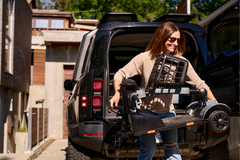
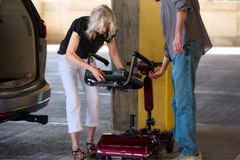
If you'll load the scooter into a car yourself, a few habits make it easier and protect your back. Take advantage of removable batteries — lift the batteries out first, then the lighter frame, so you're never hoisting the full weight at once. Lift with your legs, keep the load close to your body, and avoid twisting as you place it in the trunk. A lightweight folding ramp can help you roll rather than lift the folded scooter into an SUV or hatchback. And on the heaviest days, there's no shame in a helping hand. The point of a lightweight scooter is that loading it never becomes the reason you skip a trip.
Matching a lightweight scooter to your life
Think about how you'll use it. If you transport the scooter by car regularly, prioritize a light frame with removable batteries and a fast fold. If you travel or fly, add compact folding size to the list. If you use the scooter all day, make sure the range and capacity still meet your needs — don't sacrifice a full day's range for a slightly lighter lift. The right lightweight scooter is the one that's easy to handle and capable enough for your real routine.
A quick pre-purchase checklist
Before you buy a “lightweight” scooter, run it through four questions. What's the frame weight, and are the batteries removable so you can lift it in stages? How fast and how compact is the fold? What's the real battery range — enough for your typical day? And what's the weight capacity — does it sit comfortably above your weight? A scooter that answers all four well gives you genuine portability without hidden compromises. One that's merely light on paper may disappoint you where it counts.
Frequently asked questions
How light is too light?
If a scooter is ultra-light but has tiny range or low weight capacity, it may not suit daily use. Balance weight against range, capacity, and comfort rather than chasing the lowest number.
Can I lift a lightweight scooter alone?
Often yes — especially with removable batteries that let you lift the frame and batteries separately. Lift with your legs, keep the load close, and use a folding ramp for SUVs if it helps.
Will a lightweight scooter feel less sturdy?
Not with a quality aluminum frame. Our lightweight scooters still support up to 330 lb, so you don't have to trade sturdiness for a lighter, more portable design.
What makes a scooter lightweight in the first place?
Mainly the frame material — aluminum is strong yet far lighter than steel, which is why quality travel scooters use it. A good aluminum frame keeps the scooter light while still supporting real weight.
Does a lighter scooter have less range?
It shouldn't. Our lightweight scooters still travel up to 25.91 miles per charge. Very low range on a light scooter is a corner cut — look for light weight and real range together.
Want light weight plus real range? See the Journey Lite — a 65.2 lb frame that folds in seconds, supports 330 lb, and travels up to 25.91 miles per charge. Free US shipping, a 90-day money-back guarantee, and 10% off with code WELCOME10.