Foldable Mobility Scooters for Air Travel: A Senior's Complete Guide
-
 Jericho De Guzman
 - 2025-12-04
- 0 comments
 Jericho De Guzman
For seniors who love to travel, a foldable mobility scooter can be the difference between watching the world go by and being part of it. But the moment you decide to fly with one, a new set of questions appears: Will the airline allow it? What about the battery? How do you get it through security without stress, and get it back in one piece at the other end?
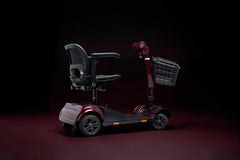
The good news is that flying with a foldable scooter is far more routine than most people fear. Airlines handle mobility devices every single day, and a lightweight folding scooter is one of the easiest to travel with. At Onward Mobility, we design scooters like the Journey Lite Aluminum Power Scooter specifically for people who refuse to let mobility limits shrink their world. This complete guide walks you through everything, before you book, at the airport, in the air, and at your destination, so you can travel with confidence.
Key Takeaways
- Foldable mobility scooters are TSA- and airline-friendly when they use approved lithium batteries.
- Airlines are legally required to accommodate mobility devices, and most transport them free of charge.
- Battery watt-hour (Wh) limits and advance notice are the two details that matter most.
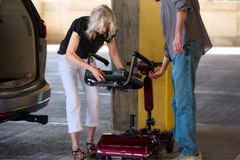
- Lightweight aluminum scooters that fold in seconds are the easiest to gate-check or store in a car trunk.
- A little preparation, calling ahead, labeling your battery, and knowing your scooter's specs, prevents nearly every travel headache.
Can You Take a Foldable Mobility Scooter on a Plane?
Yes. In the United States, the Air Carrier Access Act requires airlines to accommodate passengers with disabilities and their mobility devices, and foldable scooters are among the easiest to transport. Similar protections exist in many other countries. The single biggest factor is the battery.
Most modern scooters, including the Journey Lite, use lithium-ion batteries. Airlines permit these within specific watt-hour limits because lithium batteries are classified as dangerous goods when they exceed certain sizes. As a general rule, batteries up to 300 Wh are widely accepted, and many carriers allow one or two spare batteries in your carry-on when each is individually protected against short circuits. Always confirm the exact limit with your airline before you fly, and keep your battery's Wh rating handy, it is usually printed on the battery itself or in your product documentation.
Understanding Your Battery Before You Fly
A few minutes of battery knowledge saves a lot of stress at the gate. Here is what to know:
- Know the chemistry. Lithium-ion batteries almost always travel in the cabin, not the hold, while the scooter frame is gate-checked or stowed below.
- Know the watt-hours. If your battery lists volts (V) and amp-hours (Ah), multiply them to estimate Wh (for example, 24V x 12Ah = 288 Wh).
- Protect the terminals. Tape over exposed terminals or keep the battery in its original case so it can't short.
- Carry documentation. A copy of the battery spec sheet reassures gate agents quickly.
Before You Fly: A Simple Preparation Checklist
- Call the airline 48 hours ahead. Let them know you are traveling with a mobility scooter so they can note it on your reservation and prepare for gate-checking.
- Ask three questions: What is your battery Wh limit? Where will my scooter be stored? Where will it be returned to me, at the gate or baggage claim?
- Label everything. Tag your scooter with your name, phone number, and destination in case it is stored in the hold.
- Practice folding. Be able to fold and unfold your scooter quickly and confidently, gate agents appreciate it, and so will you.
- Photograph your scooter before handing it over, so you have a record of its condition if you ever need to file a claim.
Why Lightweight, Foldable Design Matters for Travelers
Not every mobility scooter is built for the road. Heavy-duty models are wonderful for outdoor terrain but nearly impossible to fly with, they are too heavy to lift and too large to fold. Travel-friendly scooters solve this with a folding frame and a low weight that makes lifting and storing realistic for one person.
The Journey Lite, for example, uses an aircraft-grade aluminum frame, folds in seconds, and is light enough to lift into a car trunk or stow at the gate, while still carrying up to 330 lbs and traveling up to about 25 miles per charge. That combination of portability and real-world range is exactly what makes a scooter genuinely travel-ready. If you are weighing your options, our guide to the lightest mobility scooters breaks down what to look for, and our roundup of the best travel mobility scooters compares the top picks.
At the Airport: Step by Step
Check-in and Security
Arrive early, give yourself extra time so nothing feels rushed. Tell the check-in agent you are traveling with a mobility scooter; they will guide you on gate-checking the frame and confirm where it will be returned. At security, you can usually remain seated on your scooter while TSA screens you and the device; they may swab your hands and the scooter for residue.
At the Gate
You will typically board first. Fold your scooter at the gate, remove and carry your lithium battery into the cabin if the airline requires it, and hand over the folded frame to be stored in the hold or, on some aircraft, in a cabin closet.
In the Air
Relax, your scooter is secured below. Keep your battery in your carry-on, away from metal objects that could cause a short.
On Arrival
Your scooter is usually returned at the aircraft door or, on some flights, at baggage claim. Unfold it, reconnect the battery, do a quick function check of the brakes and lights, and you are ready to roll.
Common Mistakes to Avoid
- Not calling ahead. Surprises at the gate cause delays; a quick call prevents them.
- Guessing your battery size. Know your Wh rating before you arrive.
- Over-packing the scooter. Remove baskets and loose accessories so nothing is lost in transit.
- Forgetting the charger. Pack it in your carry-on so you can top up at your destination.
Scooter or Wheelchair for Travel?
Some travelers do better with an ultralight folding wheelchair than a scooter, especially for very tight cabins and quick transfers. If you are undecided, our comparison of scooters vs. wheelchairs and our guide to rigid vs. folding wheelchairs can help you choose the right fit for how you actually travel.
Conclusion
Flying with a foldable mobility scooter is far easier than most seniors expect. With the right lightweight scooter, a quick call to your airline, and a little preparation, you can bring your independence with you, wherever the trip takes you. At Onward Mobility, our mission is to make that freedom practical, dependable, and built to last, at home and at 30,000 feet.
Frequently Asked Questions
Are foldable mobility scooters allowed on airplanes?
Yes. Airlines are required to accommodate mobility devices, and foldable scooters with approved lithium batteries are among the easiest to transport.
What battery size can I fly with?
Many airlines accept lithium batteries up to 300 Wh, with a spare permitted in the cabin when protected. Always confirm the exact limit with your airline before traveling.
How heavy is a travel-friendly mobility scooter?
Travel scooters like the Journey Lite are built from lightweight aluminum so they fold quickly and are easy to lift into a trunk or gate-check.
Do I have to pay to bring my scooter on a flight?
In most cases, no. Mobility devices are typically transported free of charge, though advance notice is recommended.
Can I stay in my scooter through security?
Usually yes. TSA can screen you while seated, then screen the device separately before you fold it for gate-check.
Where will my scooter be returned after the flight?
Often at the aircraft door, sometimes at baggage claim. Confirm with your airline at check-in so you know what to expect.
Should I remove accessories before flying?
Yes. Remove baskets and loose accessories and carry them separately so nothing is damaged or lost during handling.