Portable Mobility Scooters for Seniors: A 2026 Buyer's Guide
-
 Jericho De Guzman
 - 2025-12-18
- 0 comments
 Jericho De Guzman
A portable mobility scooter can quietly change a senior's whole week, more visits with grandkids, easier grocery runs, and the confidence to say yes to a day out. But "portable" means different things to different people, and choosing the wrong model can leave you with a scooter that is too heavy to lift or too small to be comfortable.
This guide breaks down exactly what to look for in a portable scooter in 2026, so you can match the right model to your real, everyday life, without overspending or overbuying.
Key Takeaways
- Portable scooters prioritize low weight and a folding or disassembling frame you can lift into a car.
- The best choice balances portability with comfort, battery range, and weight capacity.
- Aluminum-framed folding scooters like the Journey Lite are ideal for seniors who travel or store their scooter often.
- Match the scooter to your routine first, then compare specs, not the other way around.
What Makes a Scooter Truly "Portable"?
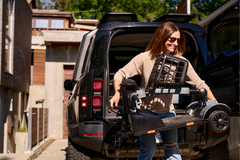
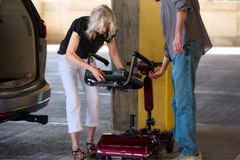
Portability comes down to three things: total weight, how it folds or breaks down, and how easily one person can handle it. A scooter that folds in seconds but weighs 90 lbs is not portable for most seniors. The sweet spot is a lightweight aluminum frame that folds compactly and can be lifted, or split into pieces, without strain.
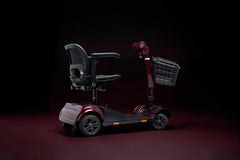
Our Journey Lite Aluminum Power Scooter is a good benchmark: it folds quickly, uses an aircraft-grade aluminum frame, and still supports up to 330 lbs with a range of about 25 miles per charge. That is the balance to aim for, light enough to move, capable enough to rely on.
Folding vs. Disassembling: Two Kinds of Portable
There are two main ways a portable scooter travels:
- Folding scooters collapse as a single unit in seconds. They are fastest to pack and unpack, ideal for frequent, quick trips.
- Disassembling scooters break into several lighter pieces (seat, battery, frame). No single piece is heavy, but reassembly takes a little longer.
If you travel often or want the simplest routine, folding usually wins. If lifting any moderate weight is difficult, a disassembling model spreads the load into smaller parts.
The Features That Matter Most for Seniors
Weight and Folding
Look for a scooter you (or a caregiver) can lift into a trunk. Test the motion in person if you can, the easiest scooter to fold is the one you will actually use.
Comfort and Seating
A padded, supportive seat and easy tiller controls make longer outings pleasant instead of tiring. Portability should never cost you comfort, look for adjustable seating where possible.
Battery Range
Most portable scooters travel 10–25 miles per charge. Think about your typical outing and choose a range with room to spare so you are never stranded.
Stability and Safety
Anti-tip wheels, good lighting, and reliable brakes matter, especially outdoors, on ramps, and near traffic.
Weight Capacity
Confirm the scooter comfortably supports your weight plus anything you carry. Riding near the limit reduces range and comfort.
Portable Scooter vs. Full-Size Scooter
Full-size scooters offer more power and range but are difficult to transport and store. Portable scooters trade some range for the freedom to travel, fly, and store the scooter in a closet or trunk. If you rarely leave the house, a full-size model may suit you; if you value independence and travel, portable wins. For a deeper comparison of lightweight options, see our guide to the lightest mobility scooters and our how-to-choose guide.
Transport and Storage Tips
- Measure your trunk before buying and compare it to the scooter's folded dimensions.
- Use a ramp or lift if lifting is difficult, many seniors pair a portable scooter with a simple trunk aid.
- Store it charged and dry, cool, indoor storage protects the battery and frame.
- Keep the charger with the scooter so topping up is effortless.
How to Choose the Right One for You
- Map your week. Errands, appointments, travel, indoor vs. outdoor use.
- Set a weight limit you can lift, then only consider scooters at or below it.
- Confirm the seat and controls feel comfortable for your body and hands.
- Check the range against your longest typical outing, with a buffer.
- Read the warranty and support, mobility equipment should come with real backup.
Conclusion
The best portable mobility scooter is the one that fits your life, light enough to travel with, comfortable enough to enjoy, and dependable enough to trust. At Onward Mobility, we build lightweight scooters that help seniors stay active, independent, and confident wherever they go.
Frequently Asked Questions
What is the most portable type of mobility scooter?
Folding aluminum scooters are typically the most portable, since they fold compactly and are light enough to lift into a car trunk.
How much do portable mobility scooters weigh?
Most portable models are built from lightweight aluminum so they fold and lift easily; exact weight varies by model and battery.
Can a portable scooter still be comfortable?
Yes. Look for a padded, supportive seat and easy tiller steering; good portable scooters balance light weight with real comfort.
How far can a portable scooter travel per charge?
Many portable scooters travel 10–25 miles per charge depending on the battery and model.
Is a portable scooter good for outdoor use?
Portable scooters handle smooth pavements and everyday outdoor use well; for rough terrain, a heavier-duty model may be a better fit.
Folding or disassembling, which is easier?
Folding is fastest for quick trips; disassembling splits the scooter into lighter pieces, which helps if lifting is difficult.